🚚 FREE US SHIPPING OVER $50 🚚

Search

SEARCH

Mozzarella and Ricotta Cheese Making Instructions

Mozzarella and Ricotta cheese instructions

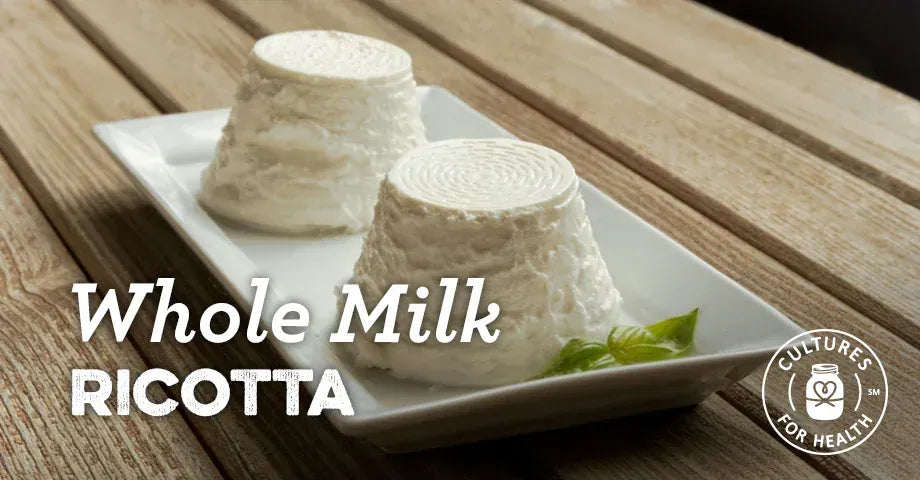
Make stretchy, shiny Mozzarella or sweet, creamy Whole Milk Ricotta. Read through your chosen recipe before starting, keep the thermometer close, and expect the first batch to teach you a lot.

🧀 Mozzarella: approx. 3/4 lb 🥣 Ricotta: approx. 1 3/4–2 lb
Before you start

Gather the kit, milk, and tools

Check off the shared setup, then review the ingredient card for your chosen cheese.

🥛
Choose milk carefully

Cow or goat milk may be whole or reduced-fat. Do not use ultra-pasteurized or UHT milk or cream.

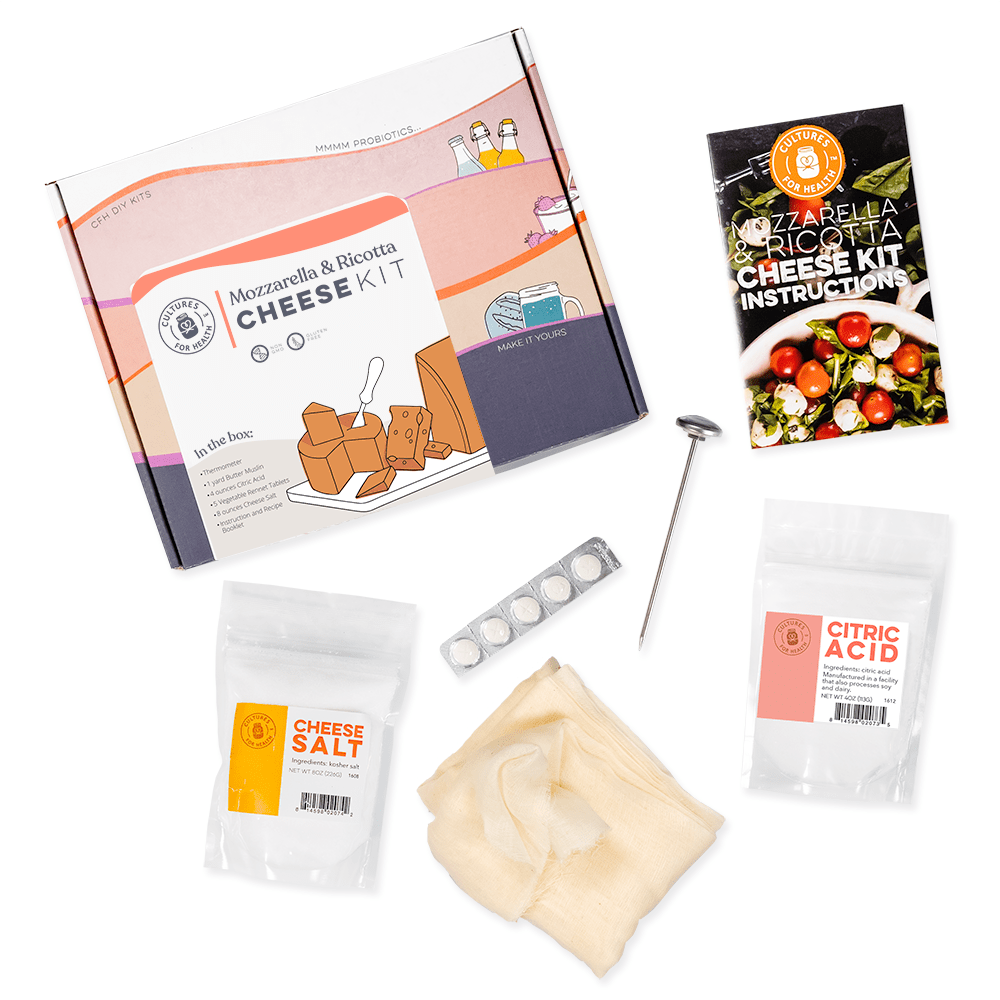
Mozzarella and Ricotta cheese kit and tools

Your Mozzarella & Ricotta Cheese Kit makes up to 20 batches of fresh cheese using our recipes.

FreezerVegetable rennet tablets
Cool, dry placeCitric acid and cheese salt
Recipe one

Mozzarella

Yield: approximately 3/4 lb · Difficulty: intermediate · Plan for about 2 hr 10 min on your first try.

Mozzarella ingredients

  • 1 gallon cow or goat milk
  • 1 1/4 cups cool, chlorine-free water
  • 1 1/2 teaspoons citric acid
  • 1/4 rennet tablet
  • 1 teaspoon cheese salt, optional

How to Make Mozzarella Cheese

Watch the Mozzarella process first, then keep this recipe open for the exact temperatures, timing, and stretch options.

Read through Step 9 before heating. Decide whether you will stretch in a microwave or stovetop water bath so the right bowl or pot is ready.
MOZZARELLA 1

Prepare the rennet

Dissolve 1/4 rennet tablet in 1/4 cup cool, chlorine-free water. Wrap the rest of the tablet and store it in the freezer.
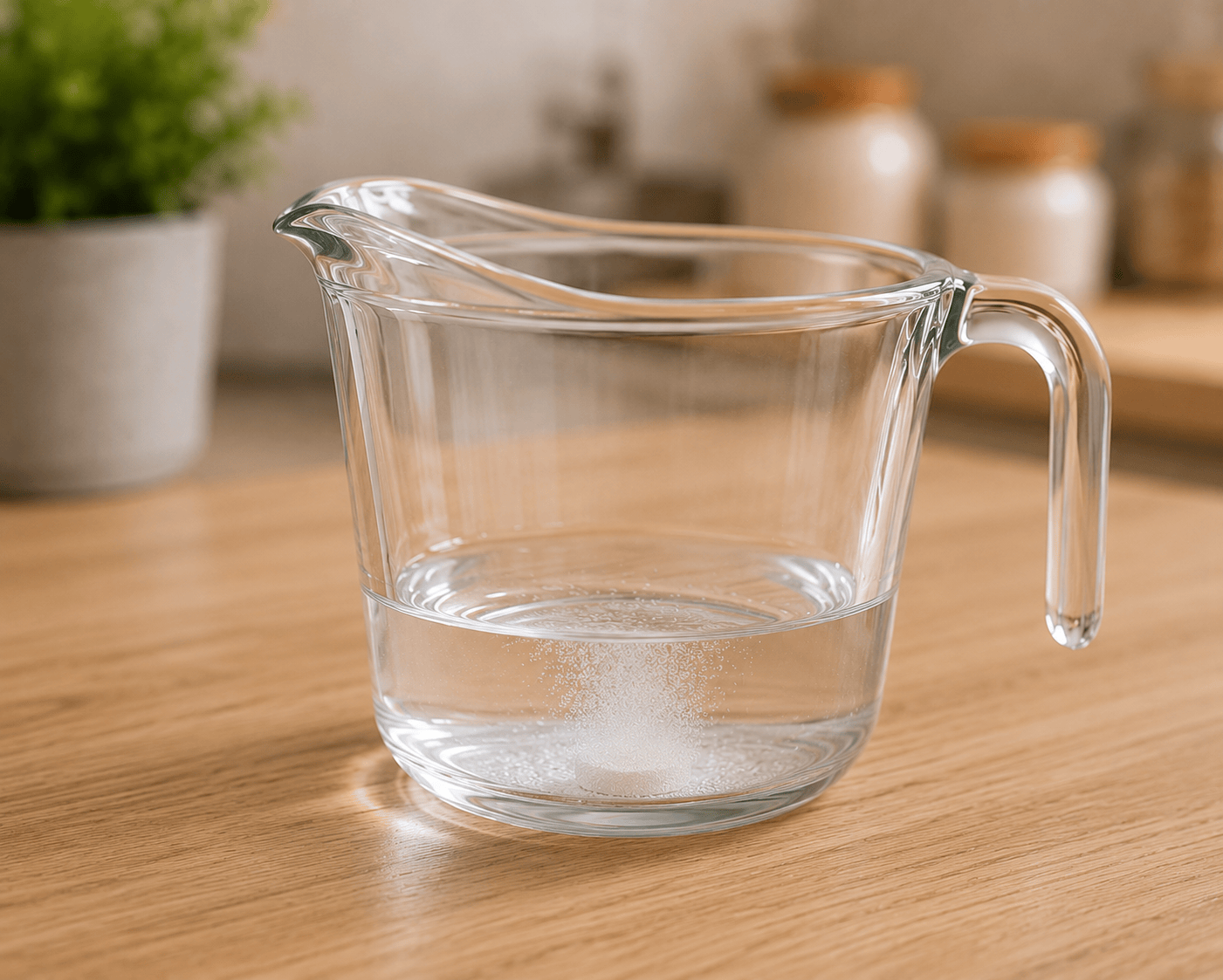

Rennet dissolving in water
MOZZARELLA 2

Dissolve the citric acid

Mix 1 1/2 teaspoons citric acid into 1 cup cool, chlorine-free water. Stir until dissolved, then pour the mixture into the large pot.
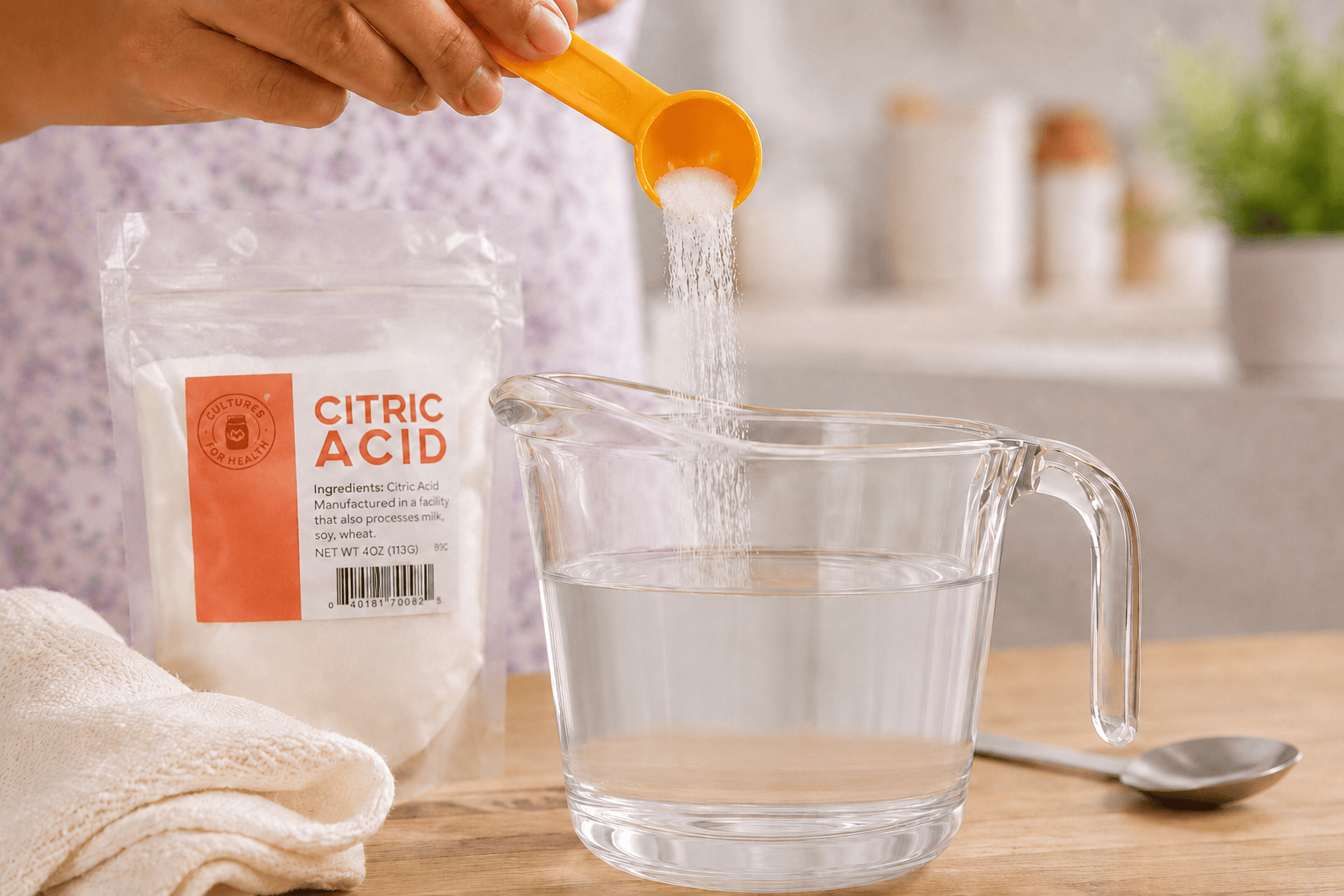
Citric acid added to water
MOZZARELLA 3

Add milk and heat

Add 1 gallon cow or goat milk. Stir vigorously with the slotted spoon while heating to 90°F, or 88°F for raw milk.

Milk warming in a pot
Heat gradually and keep the thermometer in view so the milk does not overshoot its target.
MOZZARELLA 4

Stir in the rennet

Take the pot off the burner. Slowly stir in the dissolved rennet with an up-and-down motion for about 30 seconds.
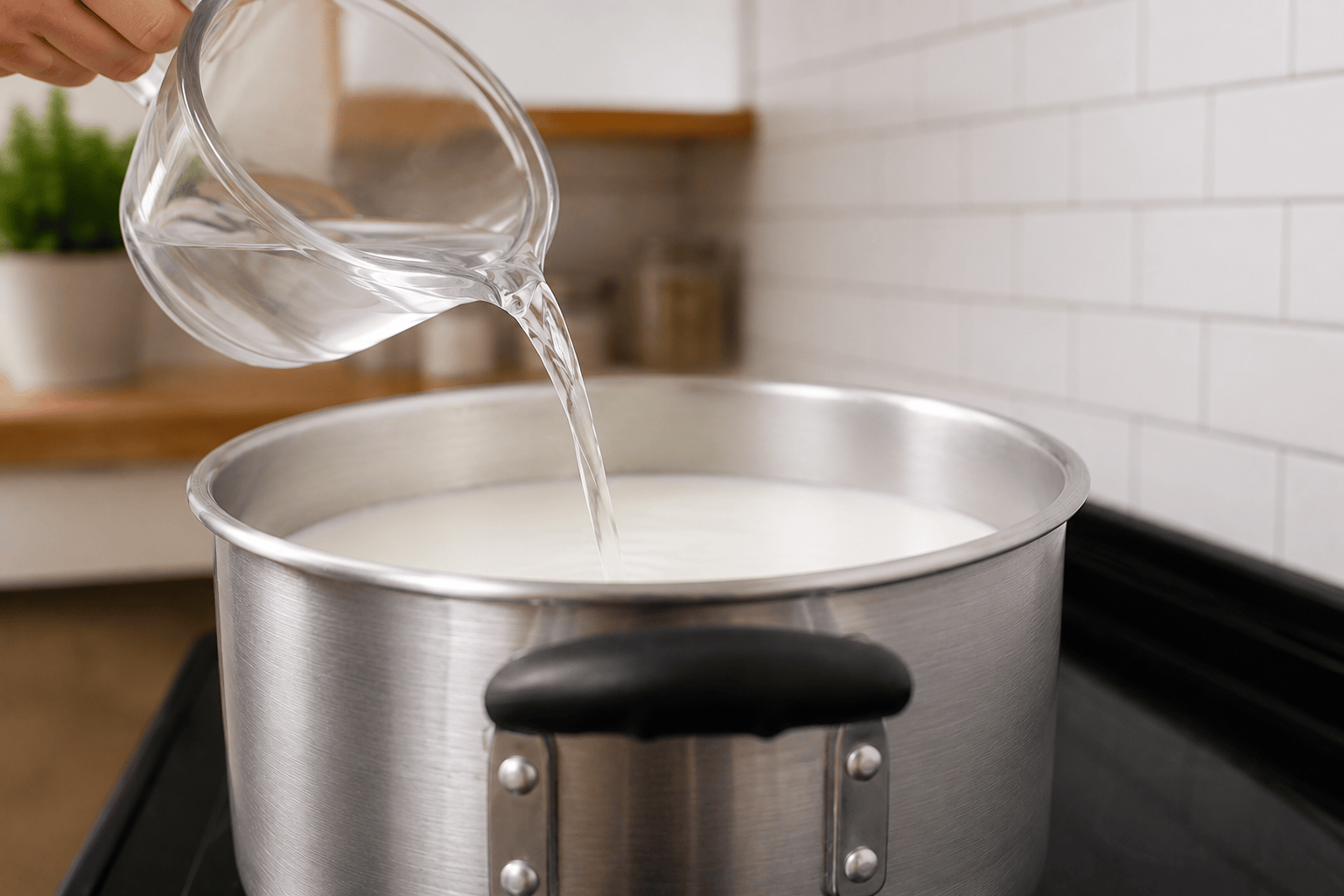
Rennet stirred into milk
MOZZARELLA 5

Cover and let the curd form

Cover the pot and leave it undisturbed for 5 minutes, or 10 minutes if using raw milk. The curd should look like custard with clear whey around it.

Set Mozzarella curd
If the curd is too soft or the whey still looks milky, let it sit for a few more minutes before cutting.
MOZZARELLA 6

Cut the curd

Use a long knife that reaches all the way to the bottom of the pot to cut the curd.
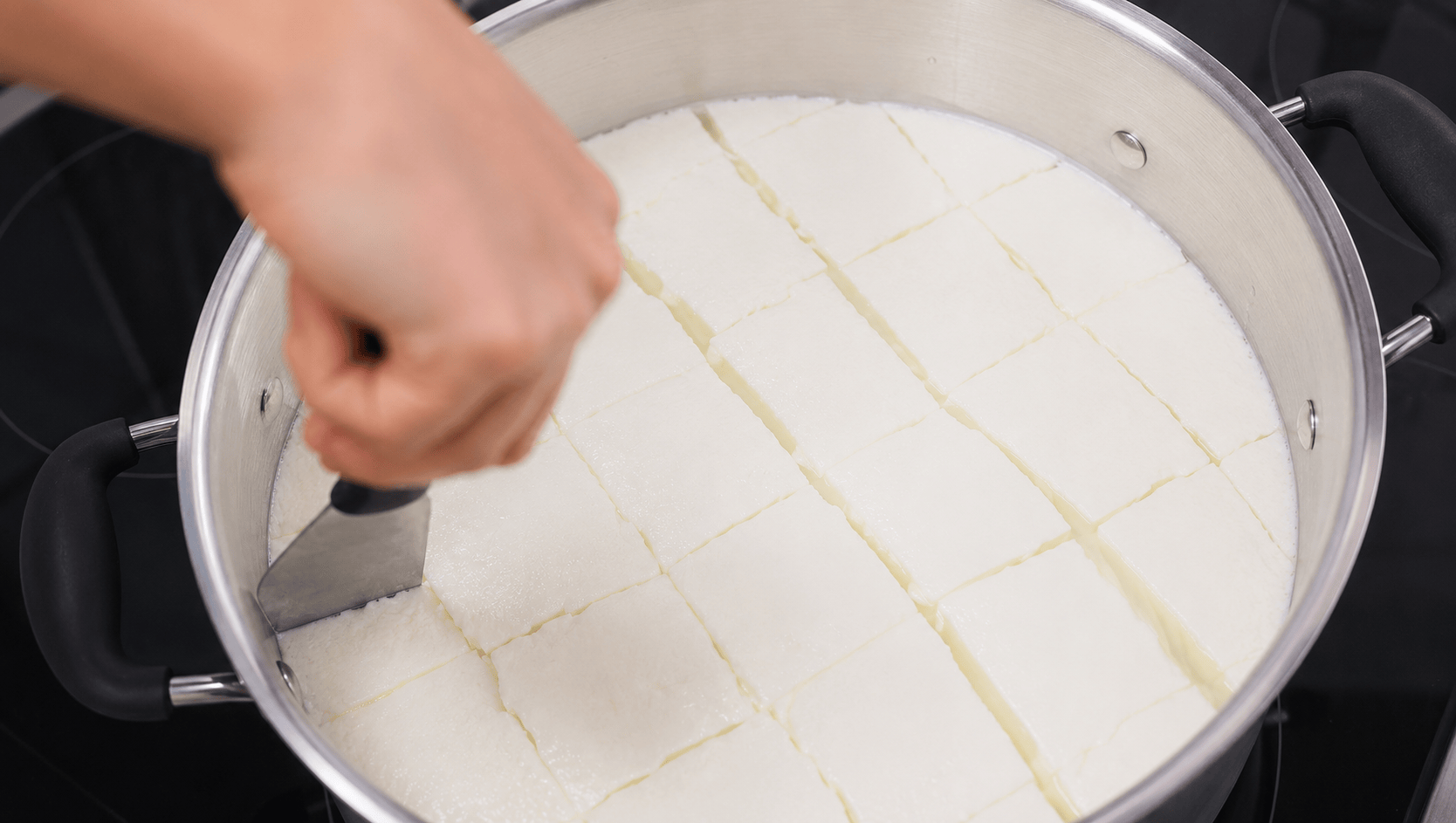
Mozzarella curd cut into a grid
MOZZARELLA 7

Reheat for your stretch method

Put the pot back on the stove and heat slowly while stirring the curd. Use the target that matches your milk and stretch method:

Curds reheating in whey
  • Raw milk: 90°F
  • Pasteurized milk + microwave: 105°F
  • Pasteurized milk + stovetop water bath: 110°F
MOZZARELLA 8

Stir off the heat

Take the pot off the burner and stir slowly for 2–5 minutes. More stirring makes a firmer cheese.
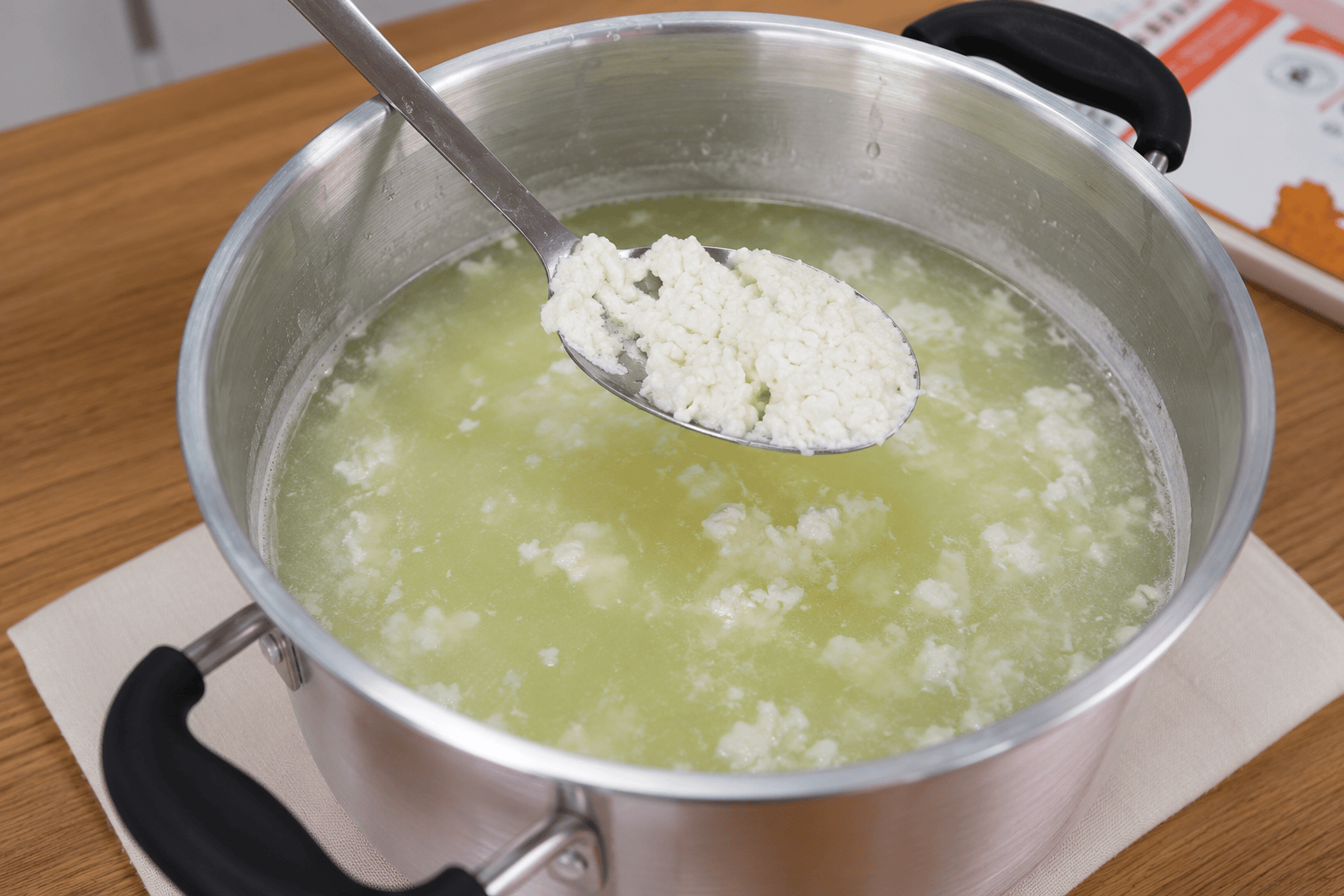
Curds stirred off heat
MOZZARELLA 9

Heat and stretch the curds

Choose the method you prepared for in Step 7.
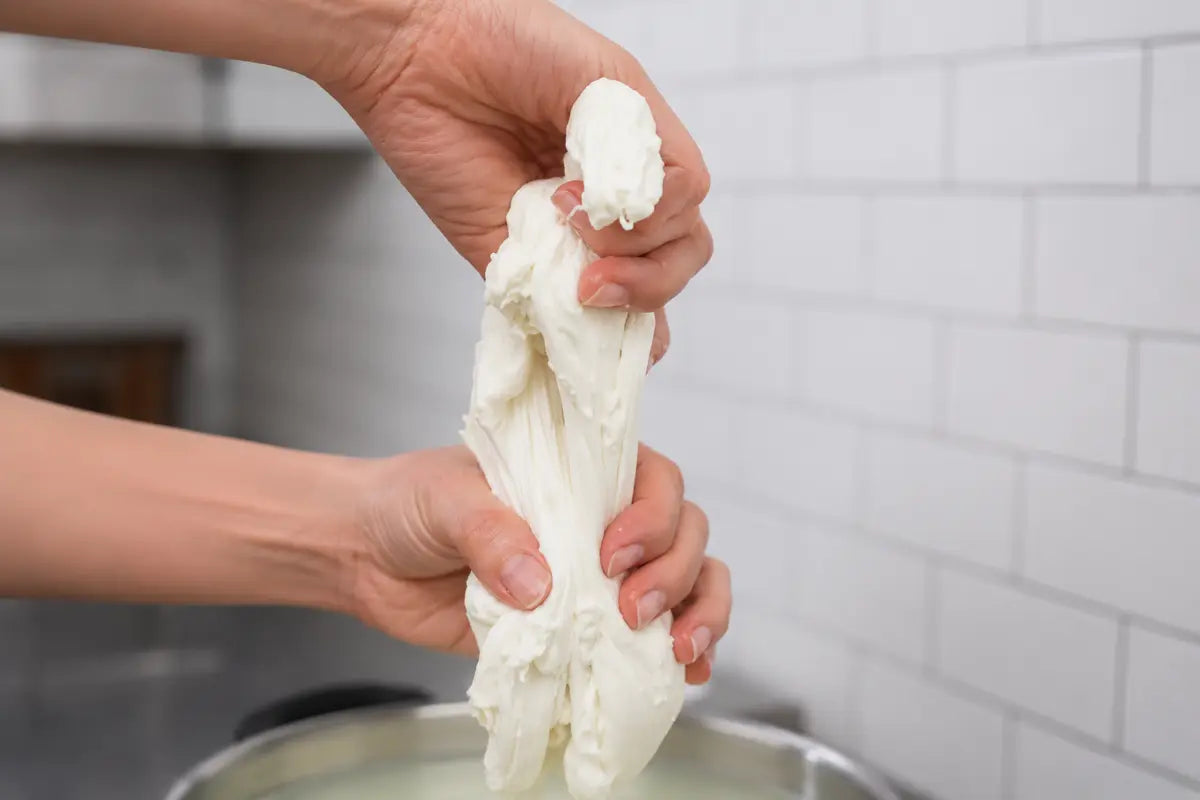
  1. 9A. Ladle curds into a large microwave-safe bowl and drain the whey. Use gloves if desired; do not press too much.
  2. 9B. Microwave for 1 minute. Fold the curds gently toward the center while draining more whey. Add 1 teaspoon cheese salt if desired.
  3. 9C. Microwave for 30 seconds. The curd should reach 160–170°F. If not, microwave for another 30 seconds.
  4. 9D. Pull the curd like taffy until it is soft and shiny. More working creates a firmer cheese.
Mozzarella curd stretching
MOZZARELLA 10

Shape the cheese

Form one large ball or several smaller balls. You can also braid it, make a log, or roll it into cheese sticks.
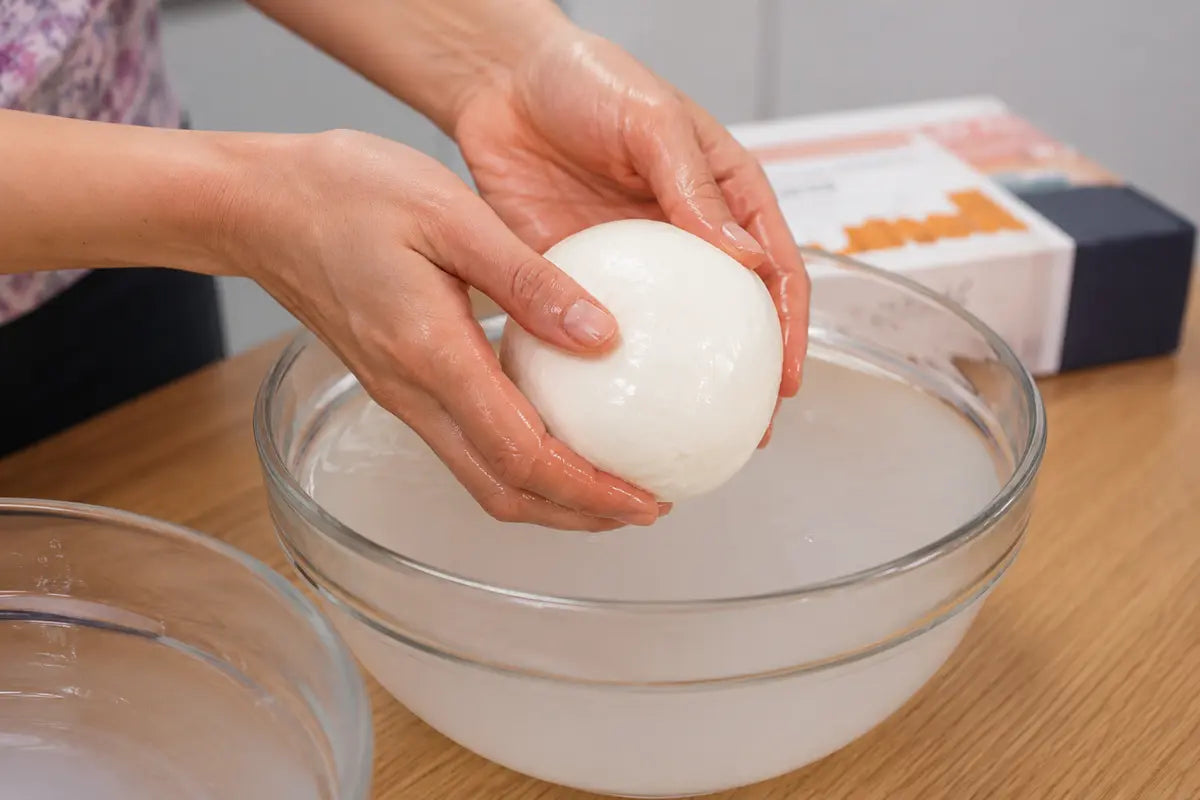
Mozzarella shaped into a smooth ball
MOZZARELLA 11

Cool it quickly

Submerge the cheese in the bowl of refrigerated water for 15 minutes, then move it into the ice-water bowl. This keeps the cheese from becoming grainy.

Mozzarella cooling in ice water
MOZZARELLA CHECK

Soft, smooth, and shiny

Your Mozzarella should hold its shape with a smooth surface and a clean, fresh aroma. More stretching makes a firmer cheese.

Recipe two

Whole Milk Ricotta

Yield: approximately 1 3/4–2 lb · Difficulty: beginner · Plan for about 4 hr 15 min including set and drain time.

Ricotta ingredients

  • 1 gallon milk
  • 1 teaspoon citric acid; use more for raw milk
  • 2 tablespoons heavy cream
  • Salt to taste

Making Ricotta Cheese at Home

See how the curds form and drain, then follow the measurements and reminders below for your Whole Milk Ricotta.

RICOTTA 1

Pour in the milk

Pour 1 gallon milk into a clean, non-reactive large pot.
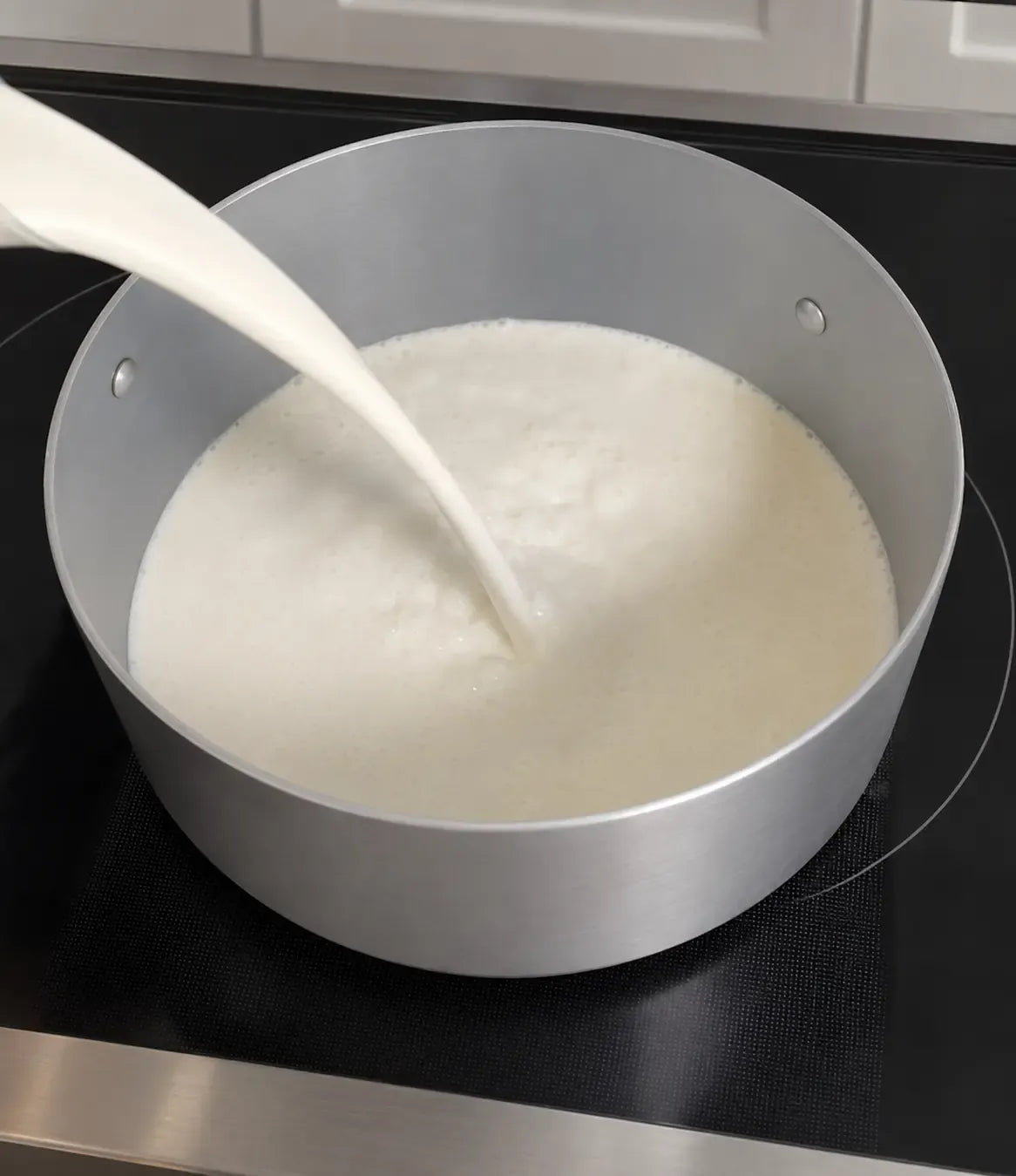
Milk poured into a pot for Ricotta
RICOTTA 2

Add citric acid

Add 1 teaspoon citric acid—use a little more for raw milk—and salt if desired. Stir to combine.
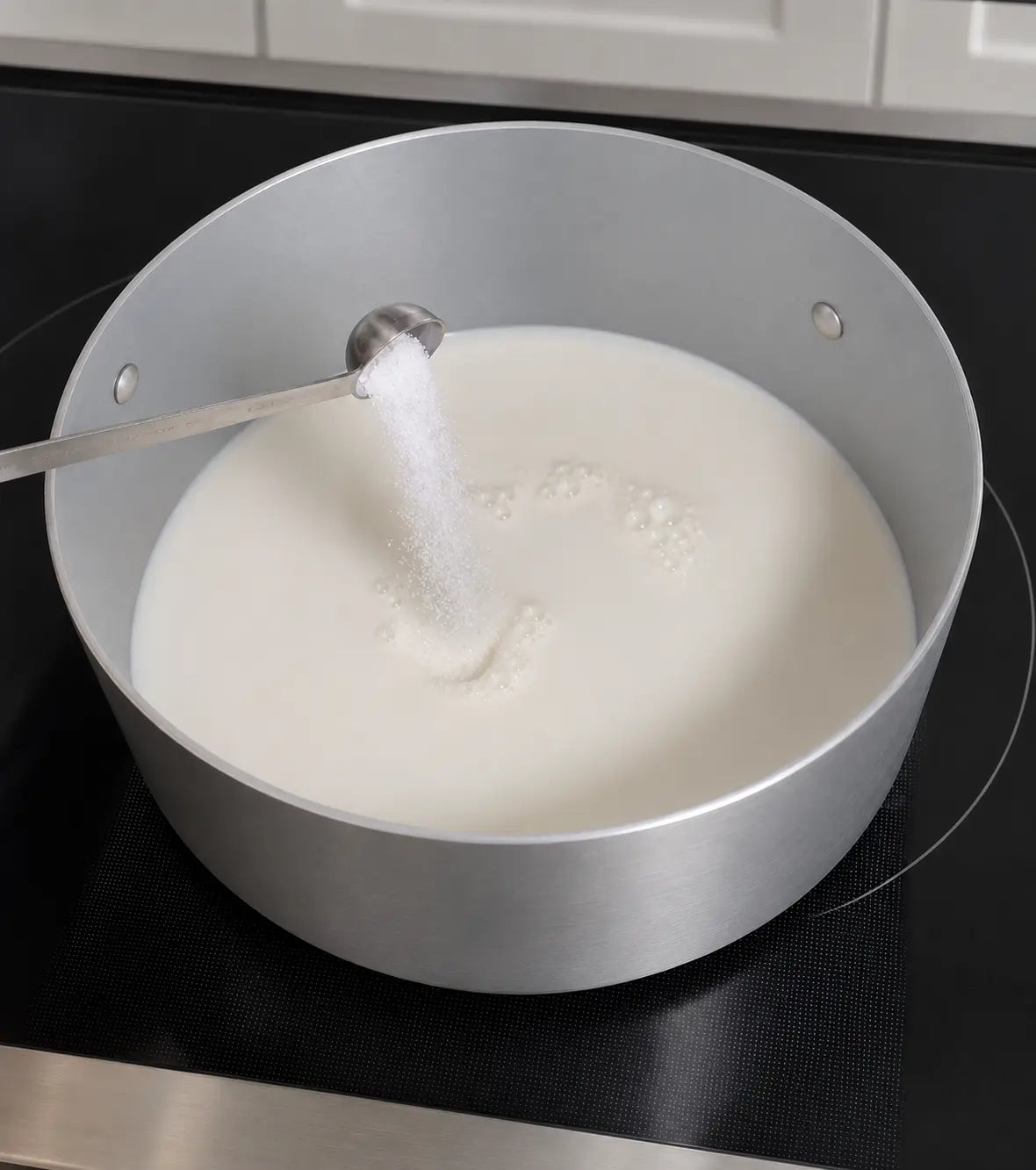
Citric acid added to milk
RICOTTA 3

Heat slowly

Slowly heat the milk to 195–205°F. Stir often to prevent scorching.
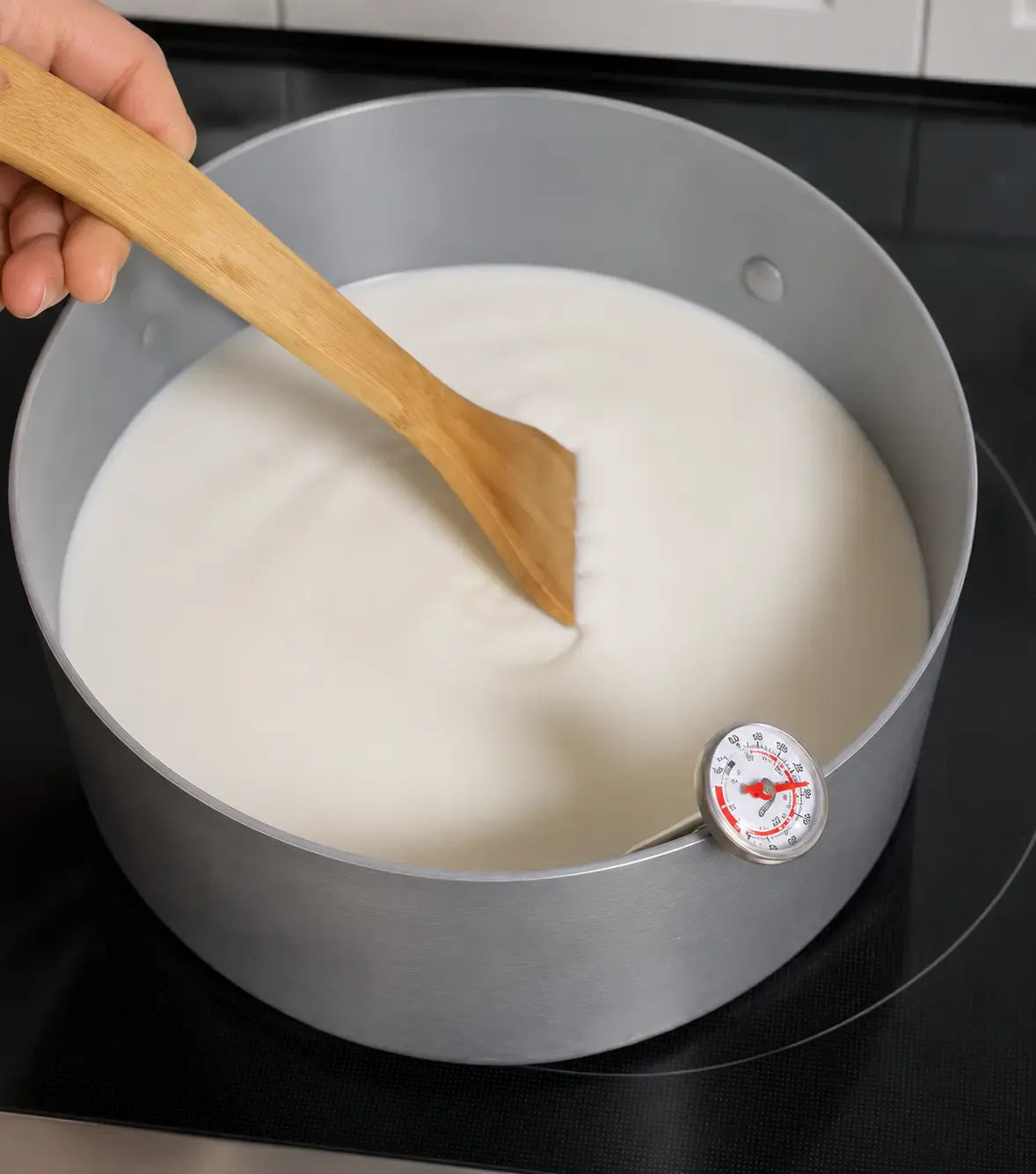
Ricotta milk heating with a thermometer
Keep a close eye on the thermometer. Overheating can scorch the milk and create a burnt flavor.
RICOTTA 4

Let the curds set

When the milk begins to curdle noticeably, turn off the heat and let it set for 1 hour. Do not stir.

Ricotta curds resting in the pot
RICOTTA 5

Line the colander

Line a colander with butter muslin and place it over a large bowl.
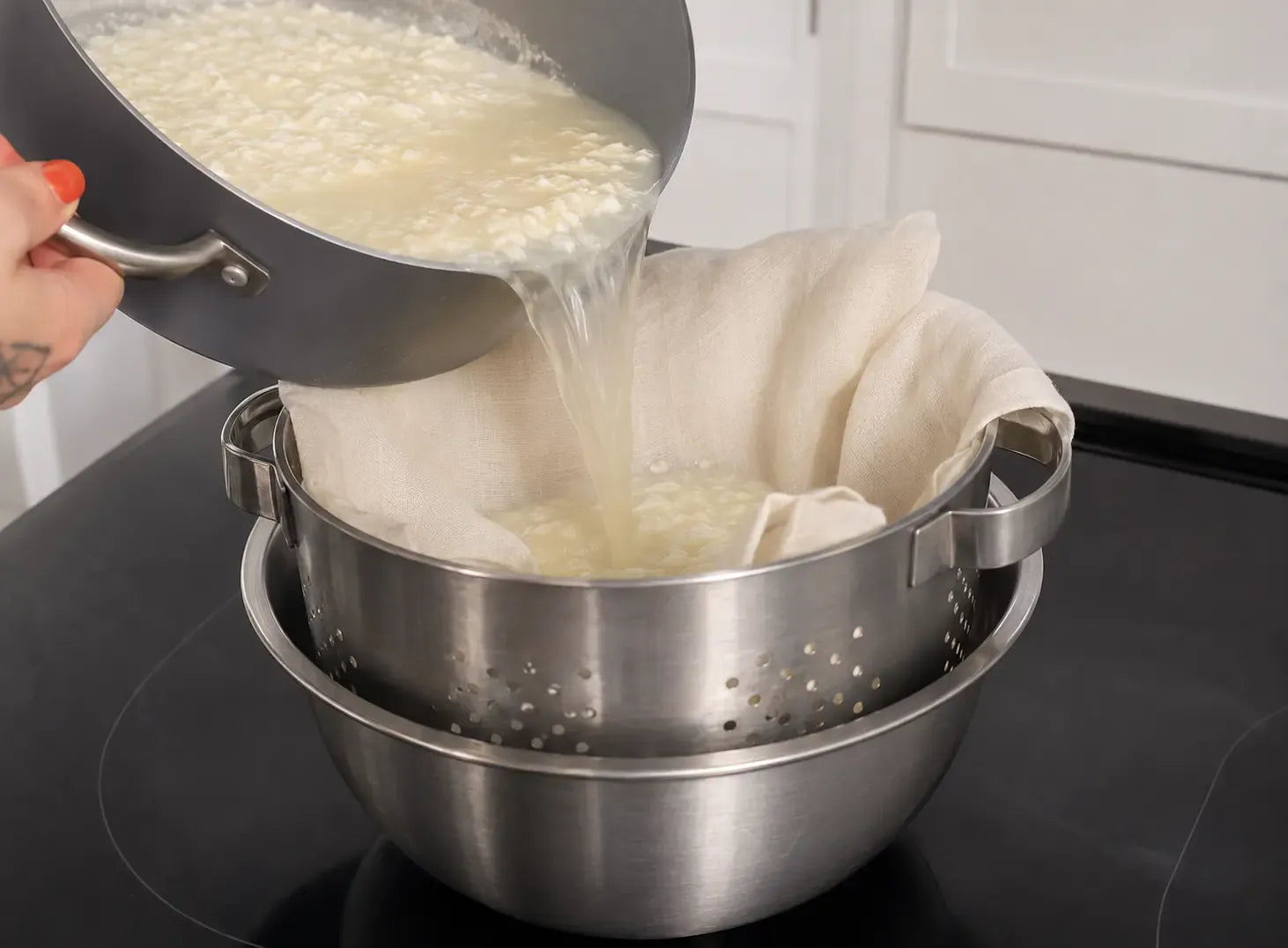
Curds poured into a muslin-lined colander
RICOTTA 6

Ladle, tie, and drain

Gently ladle the curdled milk into the lined colander. Gather and tie the muslin corners, then hang the bag with a bowl underneath. Drain for 30 minutes or longer until firm.

Ricotta draining in tied butter muslin
RICOTTA 7

Finish with cream

Place the curds in a bowl and fold in 2 tablespoons heavy cream. Salt to taste.
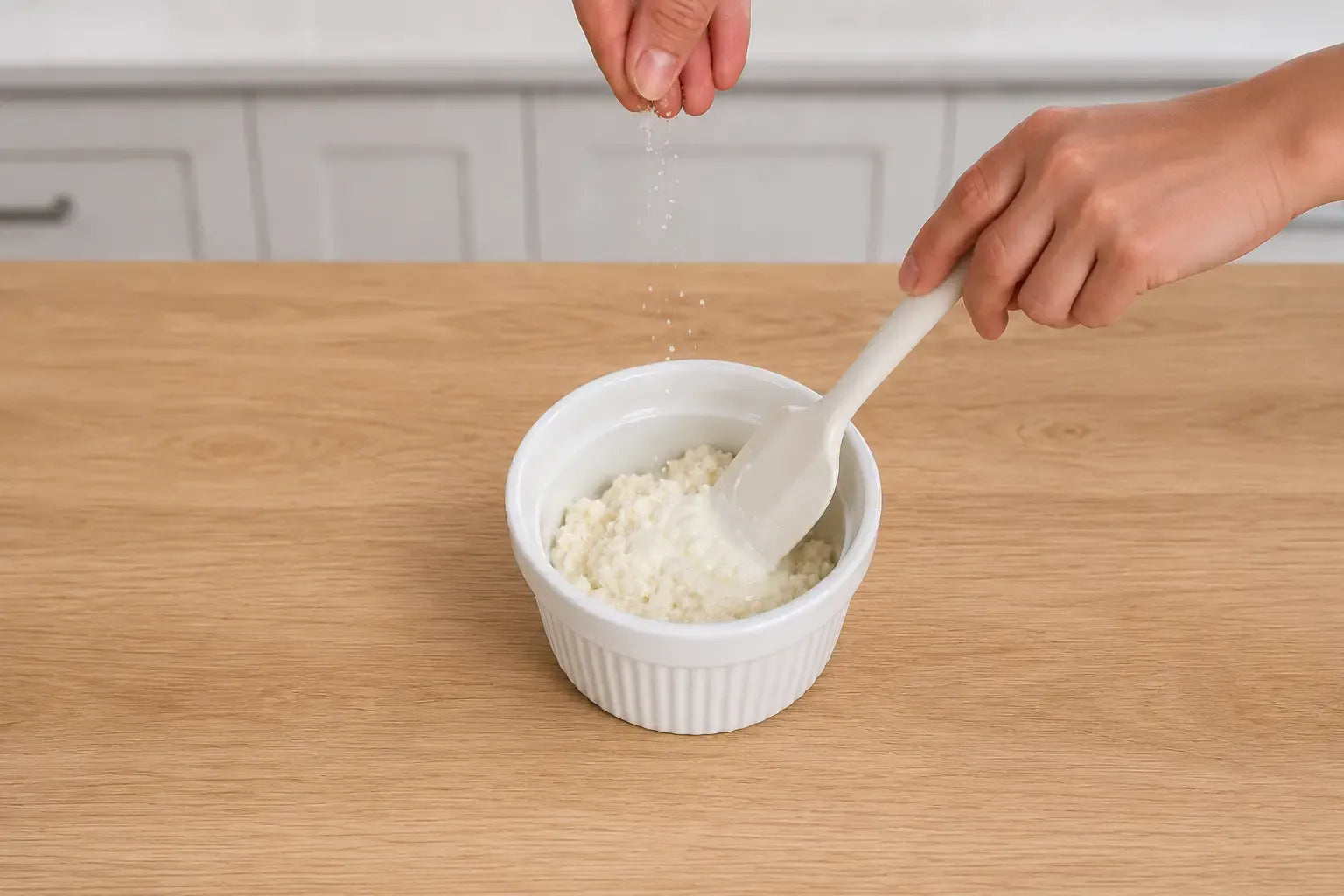
Salt added to finished Ricotta
RICOTTA 8

Cover and refrigerate

Store covered in the refrigerator for up to 1 week. Ricotta may also be frozen.
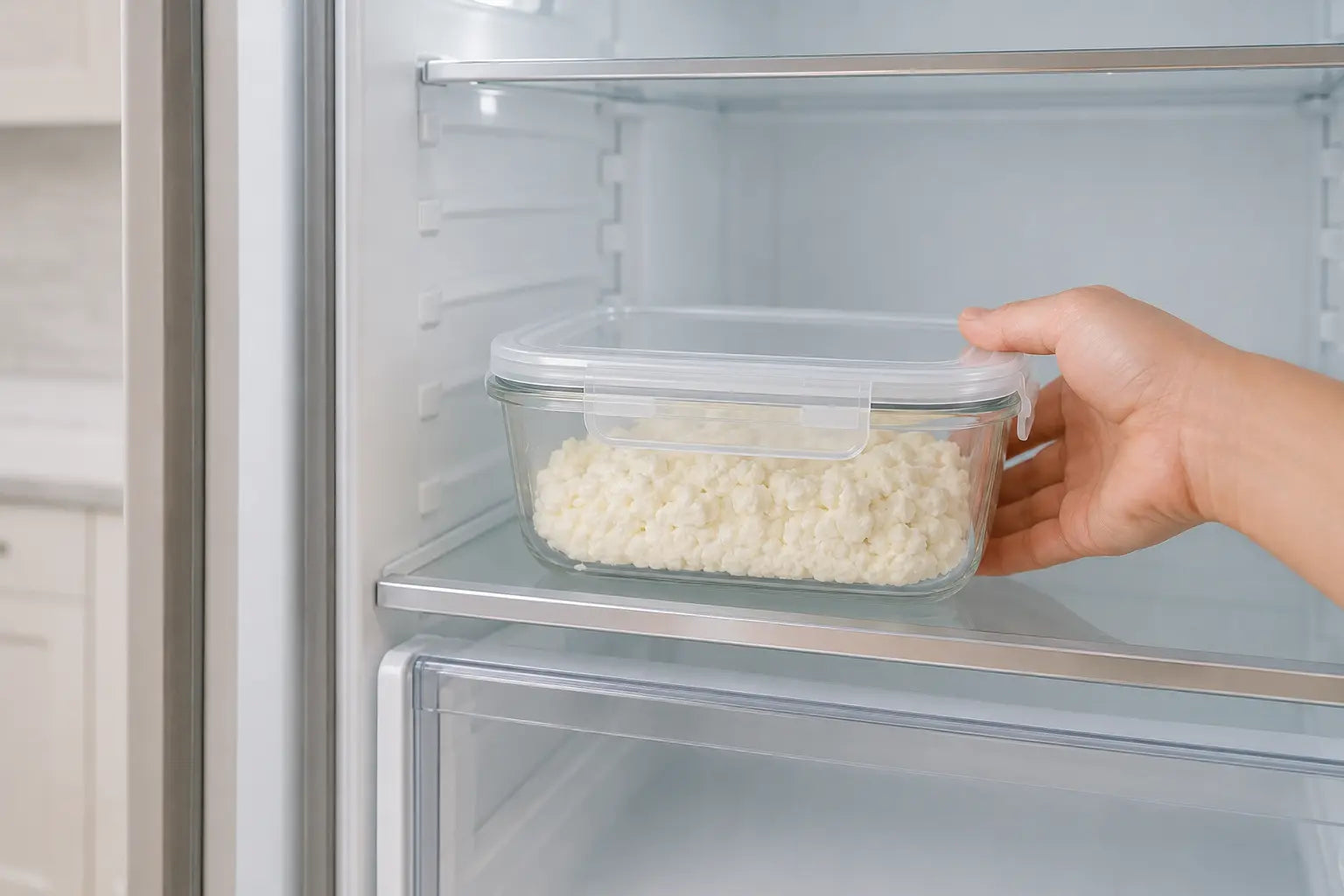
Covered Ricotta stored in a refrigerator
RICOTTA CHECK

Sweet, creamy, and ready to chill

The drained curds should be creamy and softly textured. Drain longer for a firmer Ricotta, then cover and refrigerate promptly.

Troubleshooting

Is this normal?

Milk processing, temperature, and acidity can change how curds behave. Use these checks before your next adjustment.

My Mozzarella curd formed a soft mass that looks like Ricotta
Make sure the curd sets completely before cutting it and avoid disturbing the milk while it forms. High-temperature pasteurized milk can also cause this. Try another brand—local milk is often less processed.
The curd disintegrated while heating
First, confirm the curd was fully formed. If it was, the milk may be more acidic than average. Try again using only 1 teaspoon citric acid.
The curd is not stretching after microwaving
The microwave may not be heating it enough. Return the curd for up to three additional 30-second rounds, checking between each, until it warms sufficiently.
The curd is very hot and still will not stretch
Milk brands behave differently. Start a new batch and increase the citric acid to 1 3/4–2 teaspoons. It may take a few adjustments to find the right amount for your milk.
My Mozzarella is very dry
Next time, skip the Step 7 reheat to 105°F/110°F, reduce the citric acid to 1 1/4 teaspoons, stretch less, and move the finished cheese into cold water immediately.
The finished cheese smells unpleasant
Fresh cheese should have a clean, milky aroma. Never eat cheese that smells or tastes unpleasant. When in doubt, stop and contact the CFH support team.
Your experience matters

Was this helpful?

Rate your experience so we can send you to the right next step.

Keep it fresh

Finish, chill, and store

Mozzarella

Cool immediately after shaping. Work cleanly and refrigerate promptly. Fresh Mozzarella is best enjoyed soon after making.

Whole Milk Ricotta

Cover and refrigerate for up to 1 week. Freeze it if you need to keep it longer.

Save the whey

Keep clean whey from Mozzarella for another kitchen project—including traditional whey Ricotta.

TWO CHEESES, ONE KIT.

Stuck? Ask a real cheesemaker.

Email the Cultures for Health team with your milk type, exact temperatures, and a photo of the curd. Those details help us troubleshoot quickly.

Never consume cheese that smells or tastes unpleasant.
Cheese is ready?

Make something delicious

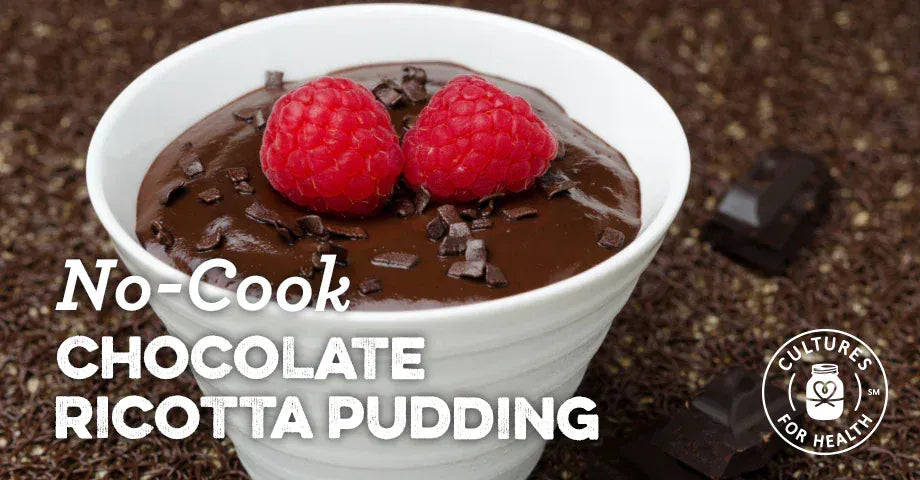
Use your finished Mozzarella or Ricotta in these official CFH recipes and how-to guides.
Useful cheesemaking tools:

Made your first fresh cheese?

That glossy Mozzarella or creamy Ricotta started as a gallon of milk—and you made it happen.

Tag #culturesforhealth so we can celebrate your batch!

CULTURES FOR HEALTH

Mozzarella & Ricotta Cheese Making Instructions · Exact temperatures, two stretch methods, reminders, troubleshooting, and recipes