FREE US SHIPPING OVER $49.99FREE COOKBOOK AT $69.99

$19.99
4 packets of cream cheese starter culture and step-by-step instructions.
The culture ingredients include organic vegetable rennet.
Store the starter culture in the refrigerator or freezer until you’re ready to activate it. Use the starter culture by the date on the bag.
You’ll supply pasteurized whole milk (not UHT/ultra-pasteurized), a non-aluminum pot and mixing utensil, thermometer, tight-weave towel or butter muslin, colander and bowl.
Sucrose, Maltodextrins, Lactic Bacteria (Lactococcus lactis subsp. lactis, Lactococcus lactis subsp. cremoris), Organic Vegetable Rennet.
Manufactured in a facility that produces products containing soy and dairy.
Preparation requires milk or cream.
If your culture isn’t working within 60 days of purchase, contact our fermenters for troubleshooting and replacement support under the culture guarantee. See returns and replacements for terms and eligibility.
A little culture, a little milk, and something homemade to share.


FOOD SAFETY MATTERS
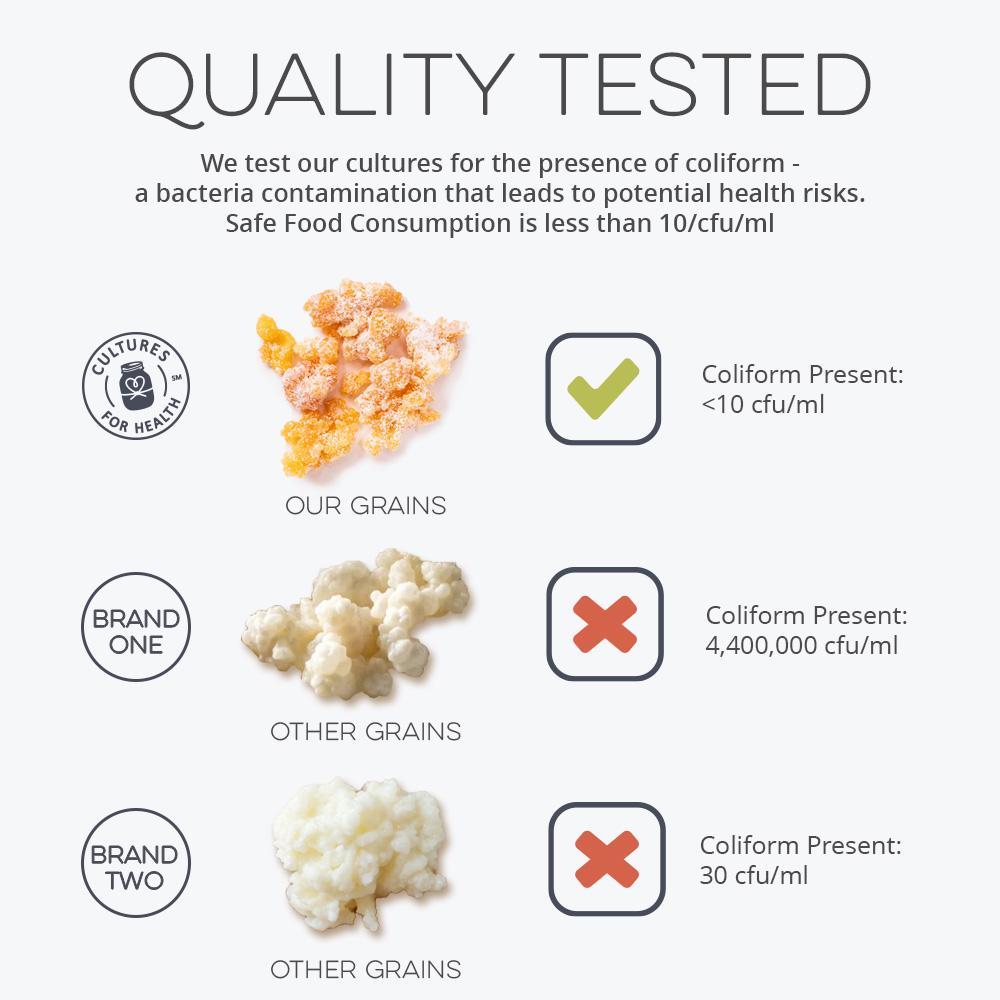
Milk kefir testing example; not a test of this culture.
A MOM'S REASON. OUR STANDARD SINCE 2002.
Cultures for Health was founded in 2002 by a single mom who wanted to feed her children the best food she could.
That care still shapes what we make. Food-safety testing is a meaningful investment, and one we keep making for the families who bring our cultures home.
Start something good in your kitchen →
FROM MILK TO SOMETHING YOU MADE.
Four packets of starter for fresh cream cheese on your schedule.
Over low heat, slowly heat 1–4 quarts of pasteurized milk, cream, or a combination to 86°F, no faster than 1°F per minute, then remove from heat. Avoid UHT or ultra-pasteurized milk. Add 1 packet of starter and mix thoroughly using an up-and-down motion for no longer than 15 seconds.
Cover the pot with a lid and culture in a warm spot for 12 hours at 72–77°F. After 12 hours, the cream cheese should be set.
Transfer the curds to a lined colander. Gather and tie the cloth, then hang it over a bowl to drain the whey for 6–12 hours at 72–77°F. Refrigerate in a closed container.
YOUR CREAM CHEESE. YOUR TABLE.
A few ideas for the cream cheese you made.
A LITTLE REASSURANCE GOES A LONG WAY.
If your culture is not working within 60 days of purchase, contact us for troubleshooting and replacement support under our guarantee. See our policy for return conditions.
See our guarantee →Cream Cheese Starter Culture$19.99
BEFORE YOU START
The bag includes 4 packets. The instructions use 1 packet with 1–4 quarts of milk, cream or a combination.
The starter ingredients include organic vegetable rennet. The current instructions use one packet of starter and do not call for separate rennet tablets.
The product page recommends pasteurized whole milk. Avoid ultra-pasteurized or UHT milk. See the instructions for the full method.
The guide calls for culturing for 12 hours at 72–77°F, followed by draining for 6–12 hours at 72–77°F.
Store starter in the refrigerator or freezer and use by the date on the bag. Store finished cream cheese in a closed container in the refrigerator for up to a week.
Our fermenters are here to help with troubleshooting and the culture guarantee terms.


